News
Uzbekistan to launch "large-scale work" to reduce energy consumption of housing and social facilities
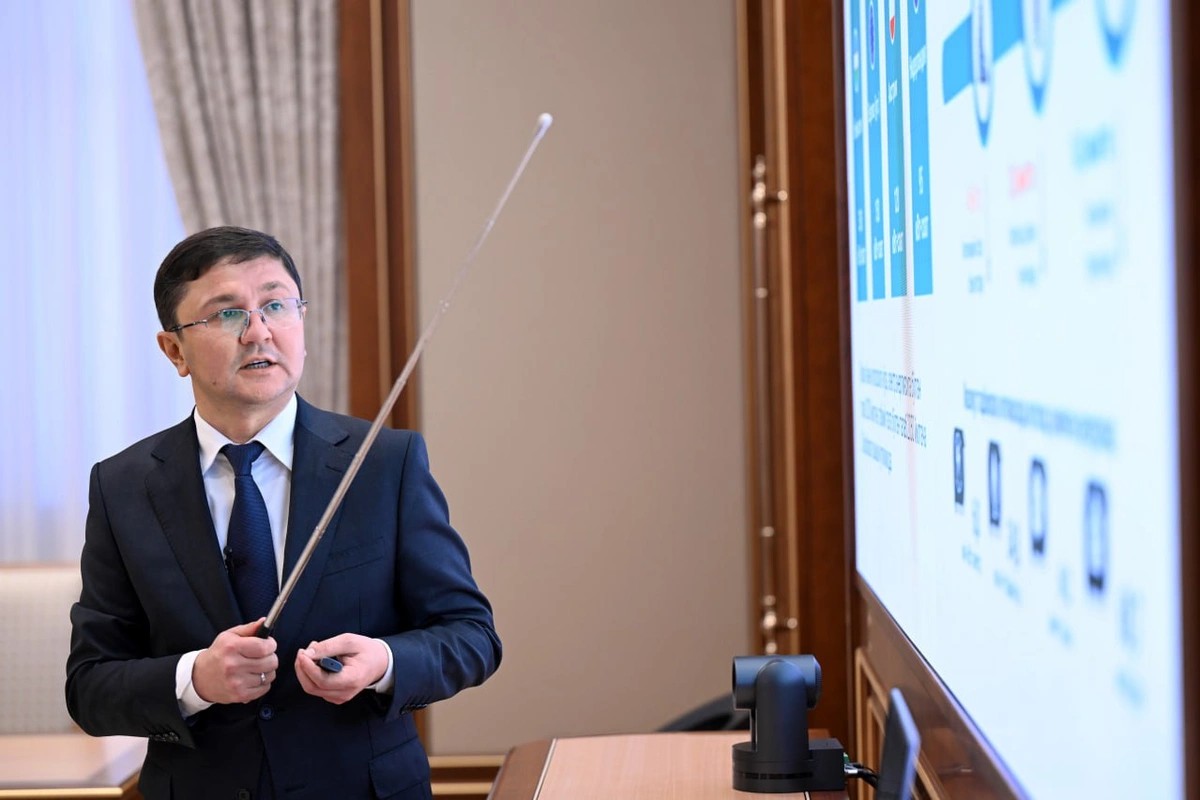
On January 14, President Shavkat Mirziyoyev reviewed a presentation on improving energy efficiency and implementing market mechanisms in the electricity sector, the press service of the head of state reported.
According to international experts, Uzbekistan is among the most energy-intensive countries: nearly 50% of final energy consumption is accounted for by buildings, while energy consumption per square meter is several times higher than in Europe.
To address this issue, a separate agency was established last year, tasked with reducing energy consumption in the economy by at least 20% by 2030, and by 15% in public and social institutions.
The presentation reviewed the agency's work plans for 2026.
Most buildings in the country were constructed in the 1960s-70s and have high energy losses.
"Therefore, a large-scale effort is planned to improve the energy efficiency of social facilities and residential areas. This year, 150 billion soums will be allocated for subsidies and compensations for these purposes," the meeting stated.
International financial institutions and private investments are planned to be involved in improving the energy efficiency of more than 30,000 social facilities in the country.
As part of this year’s investment program, 770 social facilities will be modernized based on energy efficiency standards. International funds of $264 million will be mobilized for this.
The responsible parties were instructed to develop energy efficiency standards and effective regulations for the construction, repair, and reconstruction of buildings.
The presentation also addressed centralized heating issues. High energy losses are caused by the wear of some boiler houses and heating networks. This year, as part of modernization of boiler houses and heating systems and conversion to a closed-loop system, 400 individual heating units are planned to be installed, and at least 100 km of heating networks will be renewed.
Plans have been defined for improving energy efficiency in the industrial sector. In particular, solar panels are planned to be installed this year at 142 textile enterprises. This will allow enterprises to save 722 million kWh of electricity and 693 billion soums. Additionally, 300 pumps in the drinking water supply system are planned to be modernized. Measures for introducing competitive market mechanisms in the electricity sector were also discussed during the presentation.
This year, the transfer of low-voltage networks to the private sector will begin. Initially, this will take place in the Samarkand region, and in the next stage, it is planned to expand this practice to Andijan, Jizzakh, Namangan, Syrdarya, Tashkent regions, and Tashkent city. It is expected that this will significantly reduce losses by attracting investments to upgrade the networks.
Recall that in November, the Turkish company Aksa Enerji won an international tender to manage and modernize the distribution electricity networks of the Samarkand region. The company plans to invest $1 billion over 30 years of management.
