News
Uzbekistan prefers to save water rather than transport it from Siberia
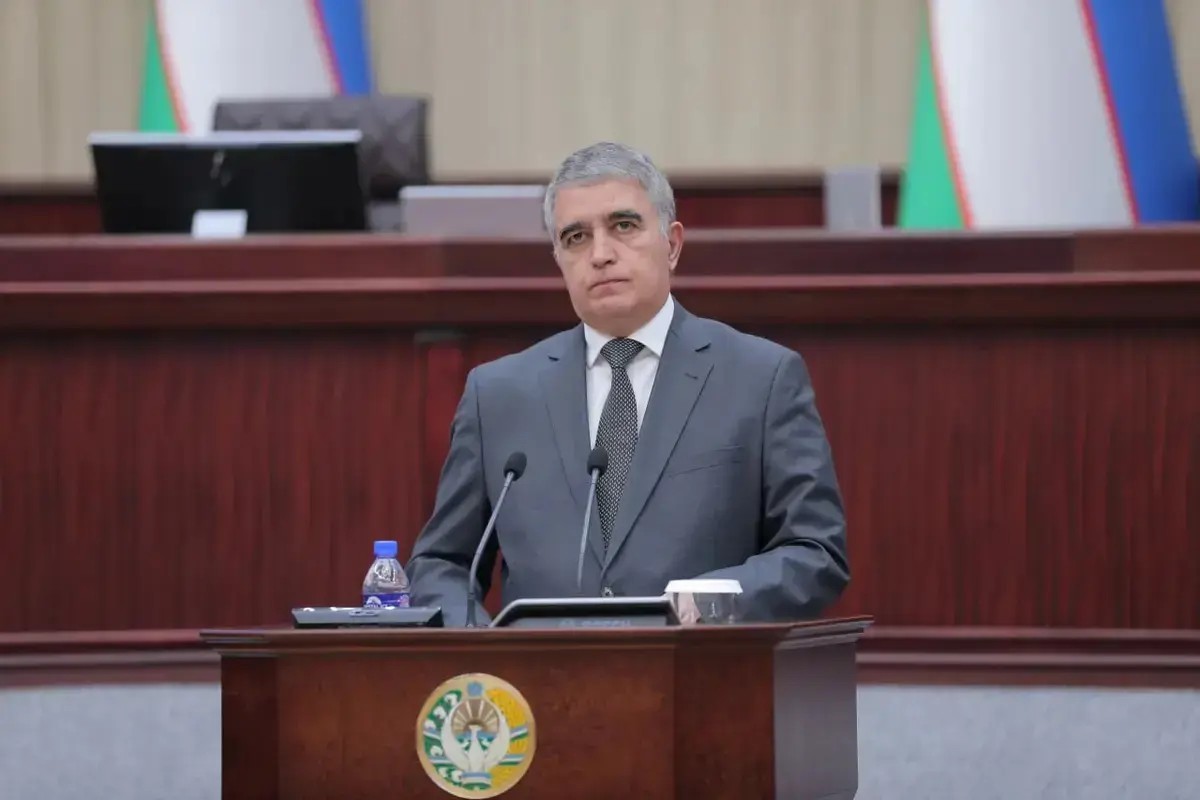
Uzbekistan considers it more beneficial to reduce water consumption by modernizing irrigation infrastructure and introducing water-saving technologies than to take part in an expensive project to divert part of the flow of Siberian rivers. Minister of Water Resources Shavkat Khamraev said this at a press conference on November 19.
According to the minister, Russian scientists are once again discussing the possibility of delivering water from Siberia to Central Asia. One of the proposed options calls for the annual diversion of about 5 billion cubic meters of water with initial investments of $100 billion.
Khamraev recalled that similar plans were developed back in Soviet times. Various methods of transporting water were studied then, but on August 14, 1986, the USSR authorities decided to stop work on the project.
The minister noted that Uzbekistan has already achieved significant savings in water resources without large-scale spending on diverting them from other regions.
«We are already saving 11 billion cubic meters of water ourselves. And we have not spent 100 billion dollars on this. If you add up all the costs of our measures, it may come to about 5 billion dollars,» Khamraev said.
According to his estimate, additional investments of $5–10 billion in modernizing irrigation infrastructure and water-saving technologies will allow the country to save even more water.
At the same time, the minister did not rule out that Uzbekistan may need additional water sources in the future. Such a need, he said, will depend on climate change, the amount of precipitation, and water volumes in the basins of transboundary rivers.
«Let us assume that by the 2050s, if such a miracle of nature does not happen, if there is less and less water from year to year, and climate change continues to work against us, we will be forced to look for additional water sources,» said the head of the Ministry of Water Resources.
Khamraev also recalled that the Soviet project envisaged diverting about 27 billion cubic meters of water annually. In his view, such a scheme could benefit Uzbekistan, Russia, Kazakhstan, and partly Turkmenistan. The minister did not rule out returning to this idea if further research and negotiations confirm its feasibility.
In November 2025, scientists from the Russian Academy of Sciences proposed once again studying the possibility of diverting part of the Ob River flow to Central Asia. Unlike the Soviet concept with open canals, the modern version involves using a closed pipeline system.
One option calls for the construction of seven pipeline lines, each about 2,100 km long. At the first stage, it is planned to transport about 5.5 billion cubic meters of water annually, and later increase the volume three to four times.
According to Dmitry Sozonov, head of projects at IES Engineering and Consulting, initial investments could amount to at least $100 billion. Annual operating costs are estimated at $700 million–1.5 billion, and construction of the main facilities could take at least ten years. The Russian Ministry of Natural Resources previously noted that no project documentation had been submitted to the ministry, and the discussion was at the scientific and expert stage.
Meanwhile, Uzbekistan continues to expand water-saving programs. On November 11, Khamraev told the Legislative Chamber that thanks to water-saving technologies, modernization of irrigation infrastructure, and digitalization, 10.69 billion cubic meters of water had been saved.
About 5 billion cubic meters of savings were achieved through water-saving technologies and laser land leveling. Another 3.14 billion cubic meters were preserved thanks to the repair, restoration, and concreting of irrigation networks.
The Water Resources Development Program for 2025–2028 provides for the reconstruction of 2,551 km of irrigation networks and the introduction of water-saving technologies on 1.4 million hectares.
According to the plans, annual water savings should reach 14 billion cubic meters by 2028 and 15 billion cubic meters by 2030.
